Beginner Plastering Mistakes and How to Avoid Them Easily
Some home improvement tasks seem easy, but most activities require a level head and steady hands. Plastering belongs in that group. Beginners tend to expect everything to work in under five minutes, but creating genuine progress takes time, attention, and mindfulness. Some blunders can change how it looks, its longevity, and the overall finish quality. This will really offer some helpful insights to anyone looking for guidance, including Auckland options for residential repair or cosmetic refinement.
Rushing Surface Preparation
Surface readiness shapes outcome. Most beginners only try to change the foreground material mix but forget to account for the wall itself. A bumpy area, a free particle, or a dust microbe lurking in the corner can ruin the finish.
- Clear every section thoroughly.
- Remove weak paint flakes.
- Check for moisture.
- Smooth rough edges gently.
When you do this bone-dry preparation, every layer will settle neatly without much buildup.” It creates bumps, hollow patches, and unwanted cracks when these steps are missed.
Using the Wrong Mix Consistency
Material consistency influences application. Thinner than sin, a blend pool just slides down in tousled drips and streaks. Since a dense mixture resists motion, this results in the continuation of drag lines and clumps.
Learners frequently visually estimate the ratio. Don’t try to be overly dramatic; a sensible approach works much better. Apply as instructed on the label, then test it over a small area first before letting it sit. Proper viscosity enables smooth spreading and consistency in drying.
How to Apply Extra Material in a Single Step?
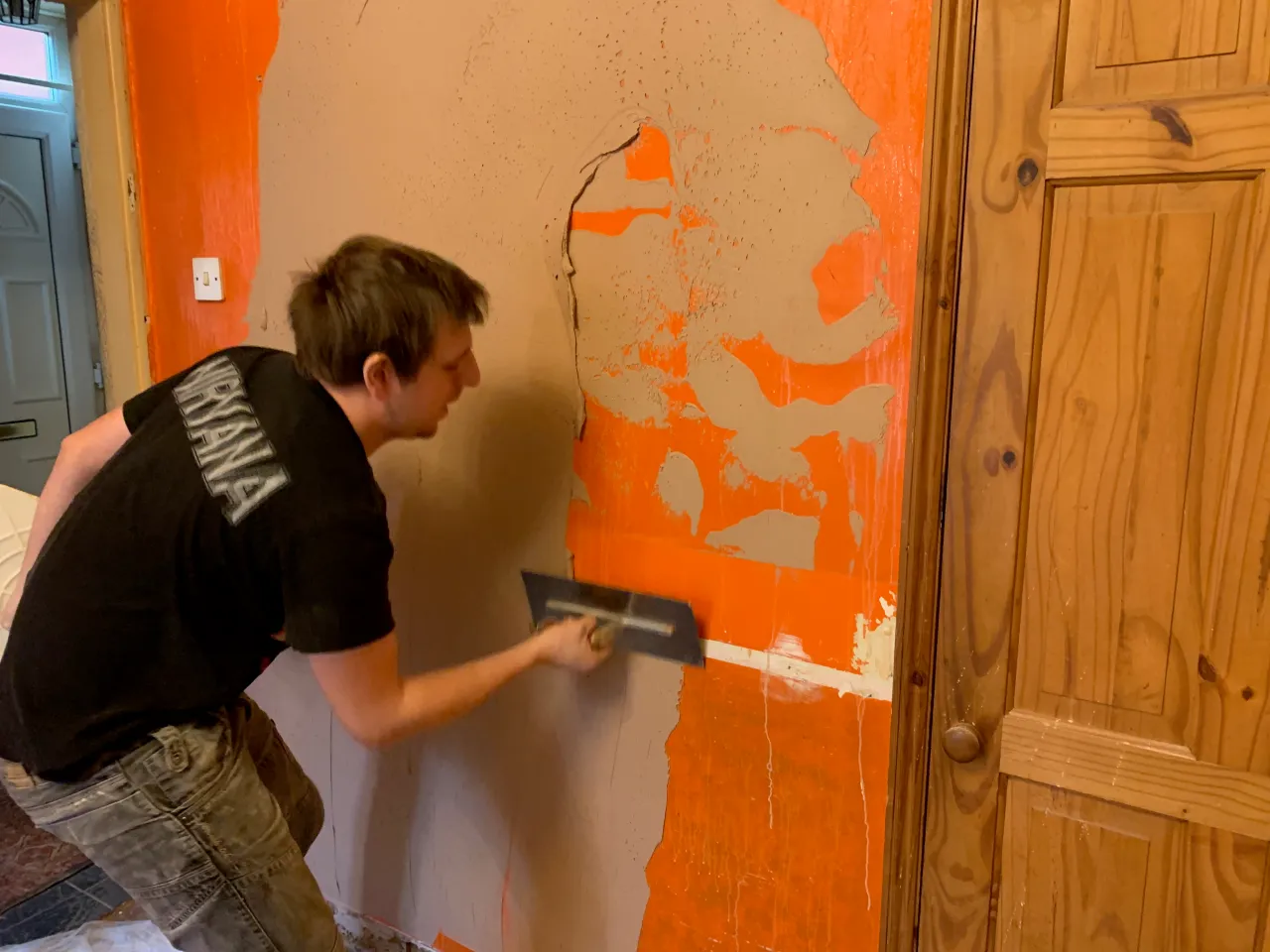
Heavy coats lead to sagging. It is a common misconception that thicker layers are faster, but it actually adds more work down the line. A tight jacket facilitates good adhesion and regulated drying.
Multiple lighter passes yield much cleaner results than one heavy sweep. There is a drying time between each coat before moving on to the next step. Refined finish with high-patience cracking formation
Neglecting Tool Cleanliness
And as much as skill affects the results, so does the tool used. Any leftover dried residue on blades leaves behind scratch marks and minute ridges in new coats. Some beginners tend to take too long before rinsing their tools after use, which, when dried, makes things a lot harder.
Having clean equipment will help you make clean strokes. Have a bucket of clean water on hand to wash tools between passes. Regular maintenance keeps tool edges intact and aids in control.
Failing to Maintain Steady Pressure
Unpredictable patterns arise from uneven pressure. Beginners tend to apply heavy pressure in one corner, only to ease up involuntarily around the other end. This inconsistency is evident in both texture and thickness.
A consistent wrist drive moves the surface as you work slowly to maintain a level surface. Avoid jerky hand movement. Focusing on the pea gives less visible marks and less chaos in lines.
Overworking Fresh Plaster
In theory, continuous smoothing seems like a solution, but monotonous movement destroys the finish. Fresh material starts setting quickly. Brushing too much will disrupt the surface, leaving dull areas or lifting partially dry portions away from the bottom.
Allow appropriate drying time. Appropriate light touches punctually maintain clarity and continuity. Sometimes, overdoing it results in streaks that need to be corrected.
Ignoring Drying Conditions
Moisture can affect drying quality, depending on temperature and airflow. Excessive heat speeds up the curing process, but not in a predictable way, & High humidity slows progress. Both extremes can trigger cracking.
Keep indoor conditions moderate. Open windows to ventilate at a low level. Avoid direct heat sources. Proper airflow promotes uniform curing.
Skipping Sanding Before Final Coats
Lightly sand the contours of that part of the surface if paint or texture will be added. This is a step that many new learners skip because, from a distance, the wall appears smooth. Imperfections show up with paint.
Quick pass with a sander to remove raised spots. Use the fine-grit paper while applying light pressure. This bit of effort greatly enhances the overall appearance.
Using Worn or Inappropriate Tools
Coats that are not shaped well are produced by a bent trowel, a damaged float, or scrapers that are not well-suited for the desired finish. New apprentices swipe legacy tools without assessing their status. Well, quality tools have a good balance which maintains accuracy and provides a comfortable grip.
Inspect each item before use. If you notice any damage to the tool, replace it so that you get an even mark.
Overlooking Safety Basics
If you plaster, then you’ve got weight, movement, and long arms. Users are protected from more effort than necessary through fundamental safety measures. Beginners often twist into odd positions or set tools down too close to openings, which increases the risk.
Wear gloves for comfort. Keep ladders secure. Keep tools out of the foot traffic area. And all these little habits help make for an easy transition.
Avoiding Guidance or Practice Sessions
Even though practice provides real comfort, a wide range of people, after seeing a single tutorial, feel very self-assured. Initial repetitions on small surfaces give students familiarity with pacing, movement, and control of their materials.
Practice reduces hesitation. With each effort, the judgment is honed and the confidence grows. In the long run, smoother finishes are relatively easier to manage.
Considering Local Help When Needed
In metropolitan regions, homeowners look for plastering Services Auckland specialists, where work that requires more expertise or prior damage creates dissoluted repair requirements. Self-work is satisfying, but some jobs require experience. If anyone is struggling with a particularly difficult part, they can ask for guidance or partial help. That support, on occasion, helps hold property value and keeps unnecessary redoing of the work at bay.
During this process, small improvements become possible if you exercise patience and use the correct techniques; however, only wider repairs are achievable by the reliable plastering professionals in Auckland. Example One: Early mistakes create a path for learning to advance and stay on track for improvement.
Conclusion
Plastering results are much better if you do a few things before mixing any plaster. Proper planning, stuffing a few techniques, and good drying practices will ensure you get nothing to lose plastering. Watching the consistency of your mixtures, keeping clean tools, planning for light coats, and allowing each stage to settle fully will help a beginner avoid some common mistakes. These simple changes encourage neat finishes and reduce maintenance down the line. Even difficult surfaces can change from a nightmare into a reasonable expectation for new learners with some awareness and practice.